What Does Peranakan Mean? Baba, Nyonya and Where to See It in Singapore
"Peranakan" is a Malay word that comes from anak, meaning child. It means someone born here whose family came from somewhere else (Peranakan Museum). In Singapore it usually means the Peranakan Chinese: families who come from Chinese traders who settled in the region long ago and married local women. The men are called baba and the women nyonya (also spelled nonya).
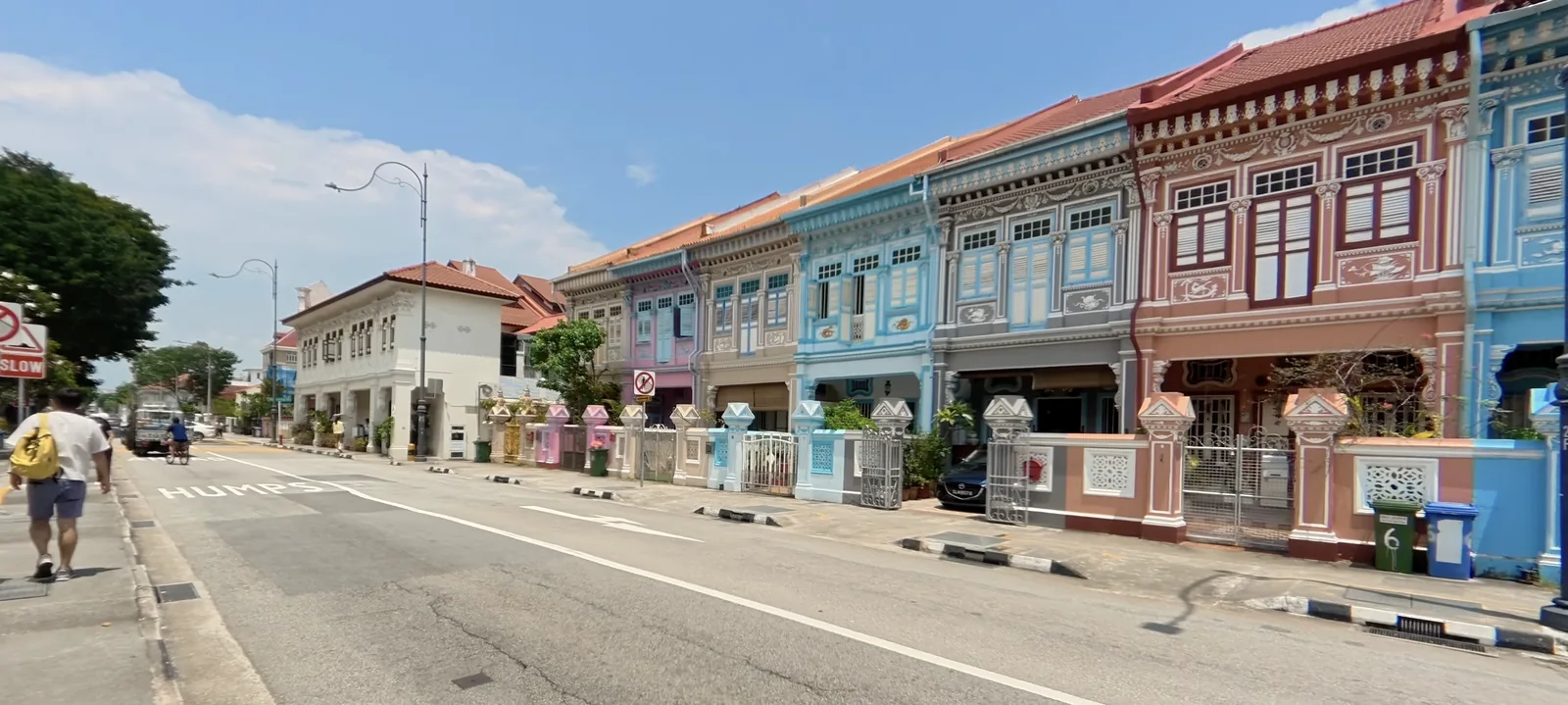
That's the short answer. The longer one explains the pastel houses in Joo Chiat and the kueh shops on East Coast Road. It also explains why a Peranakan family might speak Malay at home but pray to their ancestors the Chinese way.
Is Peranakan Chinese or Malay?
Both, in different parts of daily life. Many Singapore Peranakans trace their families back to Malacca in the 1400s, where Chinese traders are thought to have married local women. Their children kept Chinese customs, like praying to their ancestors, but spoke Malay and cooked with Malay spices.
Think of a family that has lived abroad for generations. They keep grandma's festivals and recipes, but at home they speak the local language. Over hundreds of years, that mix became a culture of its own.
From the late 1800s to the mid-1900s, Peranakans were also called Straits Chinese. That's because most were born in Singapore, Penang or Malacca, which the British ran together as the Straits Settlements. Many went to English schools, and the British often picked them as community leaders.
Are all Peranakans Chinese?
No. Peranakan just means born here with roots somewhere else, so other communities use the word too. The Peranakan Museum also counts the Chetti Melaka (Peranakan Indians) and the Jawi and Arab Peranakans.
The Chetti Melaka come from South Indian Hindu traders who married local women in Malacca. At home they speak mostly Malay, mixed with Tamil and Chinese words, and about 5,000 live in Singapore (Roots). Jawi Peranakans are local-born Muslims with Indian and Malay roots.
When people in Singapore just say "Peranakan", they almost always mean the Chinese community. So does the rest of this post.
What language do Peranakans speak?
The old home language is Baba Malay: Malay with lots of Hokkien words mixed in. Speakers often just call it "Peranakan", and Singapore and Malacca each have their own version.
Today most Peranakans in Singapore speak English first. The Peranakan Museum says the Peranakan languages are now at risk because English has taken over.
What do Peranakan women wear?
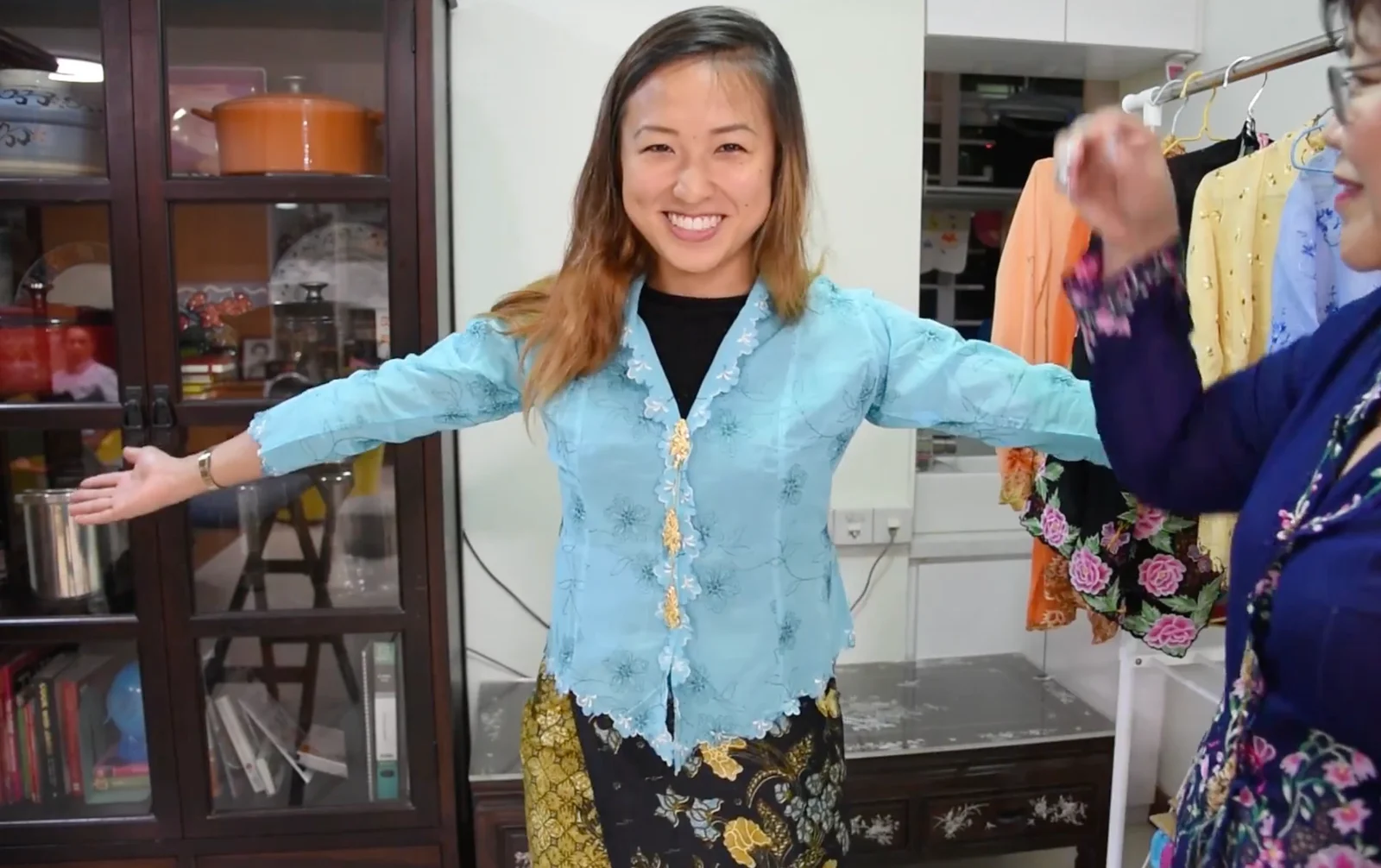
The nyonya kebaya: a short, fitted blouse, often see-through and embroidered with flowers and birds. In the 1920s it took over from the longer baju panjang as the outfit most nyonyas chose. It's worn with a batik sarong, and instead of buttons it's held closed with a kerosang, a set of three linked brooches.
Isn't the kebaya Malay? Yes, that too. The kebaya came from Indonesia, and Malay and Peranakan women each wear it in their own way. In December 2024, Singapore, Brunei, Indonesia, Malaysia and Thailand got it added to UNESCO's list of the world's living cultural traditions (UNESCO).
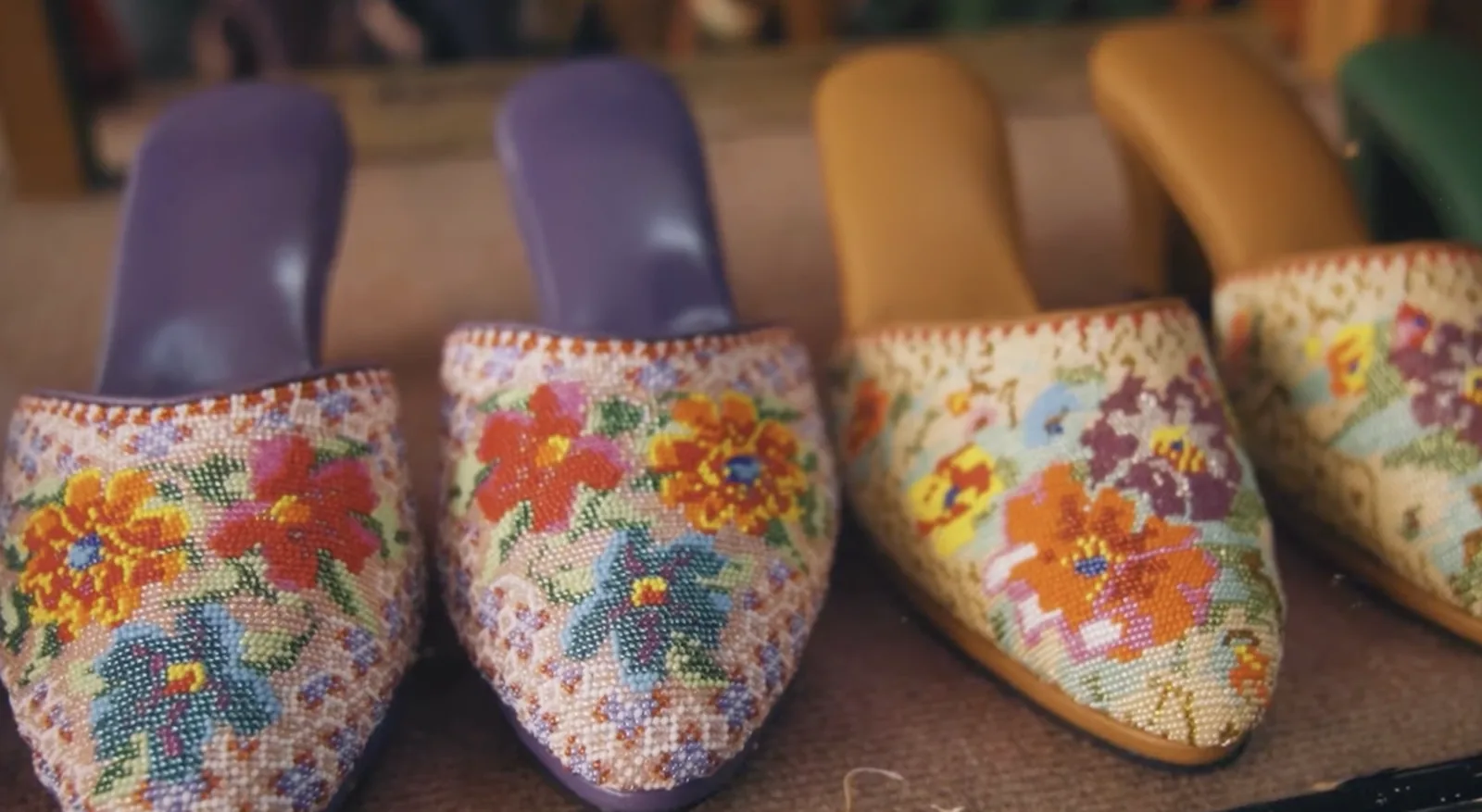
On their feet, nyonyas wore kasut manek, beaded slippers. They sewed the beaded top themselves with tiny glass beads, then sent it to a shoemaker to finish. Beaded slippers replaced embroidered ones in the 1920s.
Are they comfortable? The beads cover only the top of the slipper, so you never stand on them. Underneath is a normal sole.
What does Peranakan food taste like?
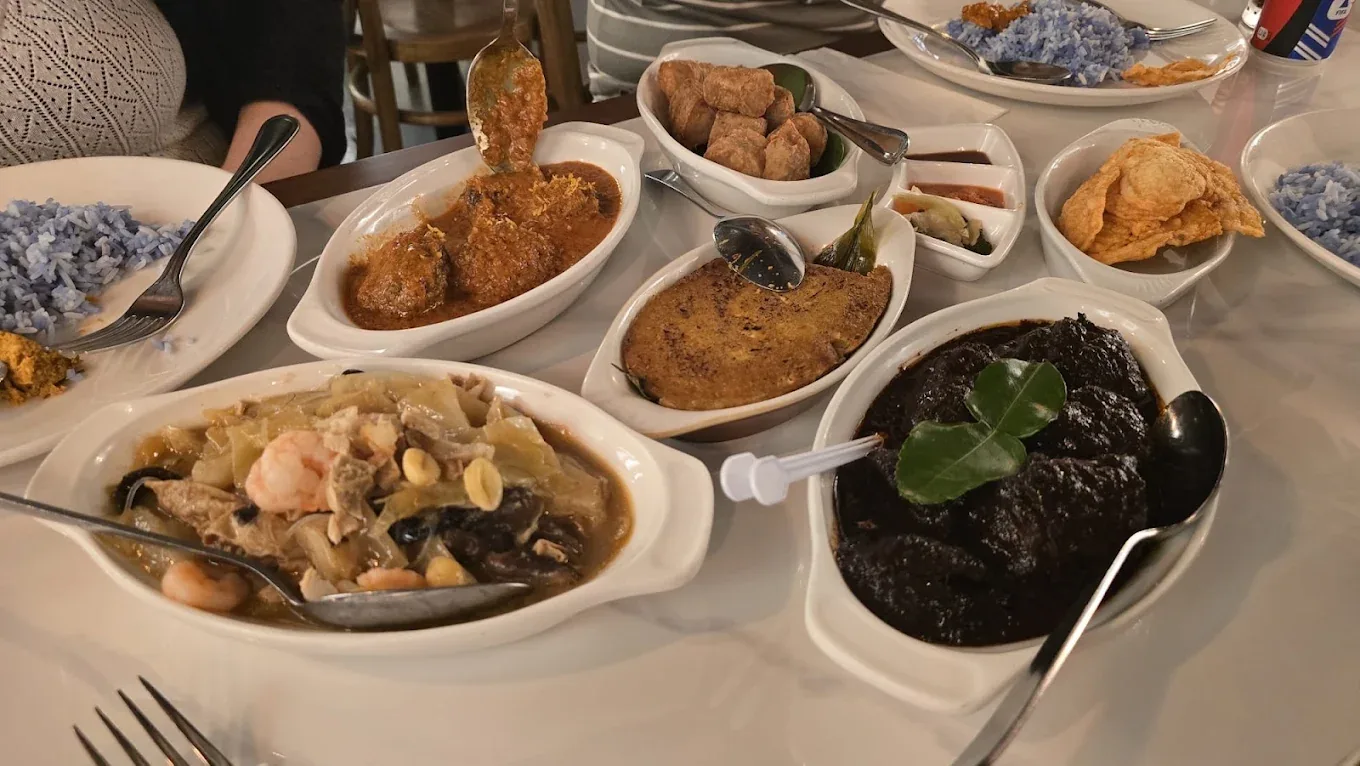
Think Malay spices with Chinese ingredients. Nyonya cooking uses rempah (a pounded spice paste) and coconut milk, like Malay cooking does. But unlike Malay food, it often uses pork, so don't assume a Peranakan restaurant is halal. Nyonyas were traditionally expected to be good cooks.
The dish with the best story is ayam buah keluak: chicken cooked in a spicy, sour tamarind gravy with black keluak nuts. Raw, the nuts are poisonous. They have to be buried for a while, then soaked and cooked before they're safe to eat. That makes it one of the hardest Peranakan dishes to make.
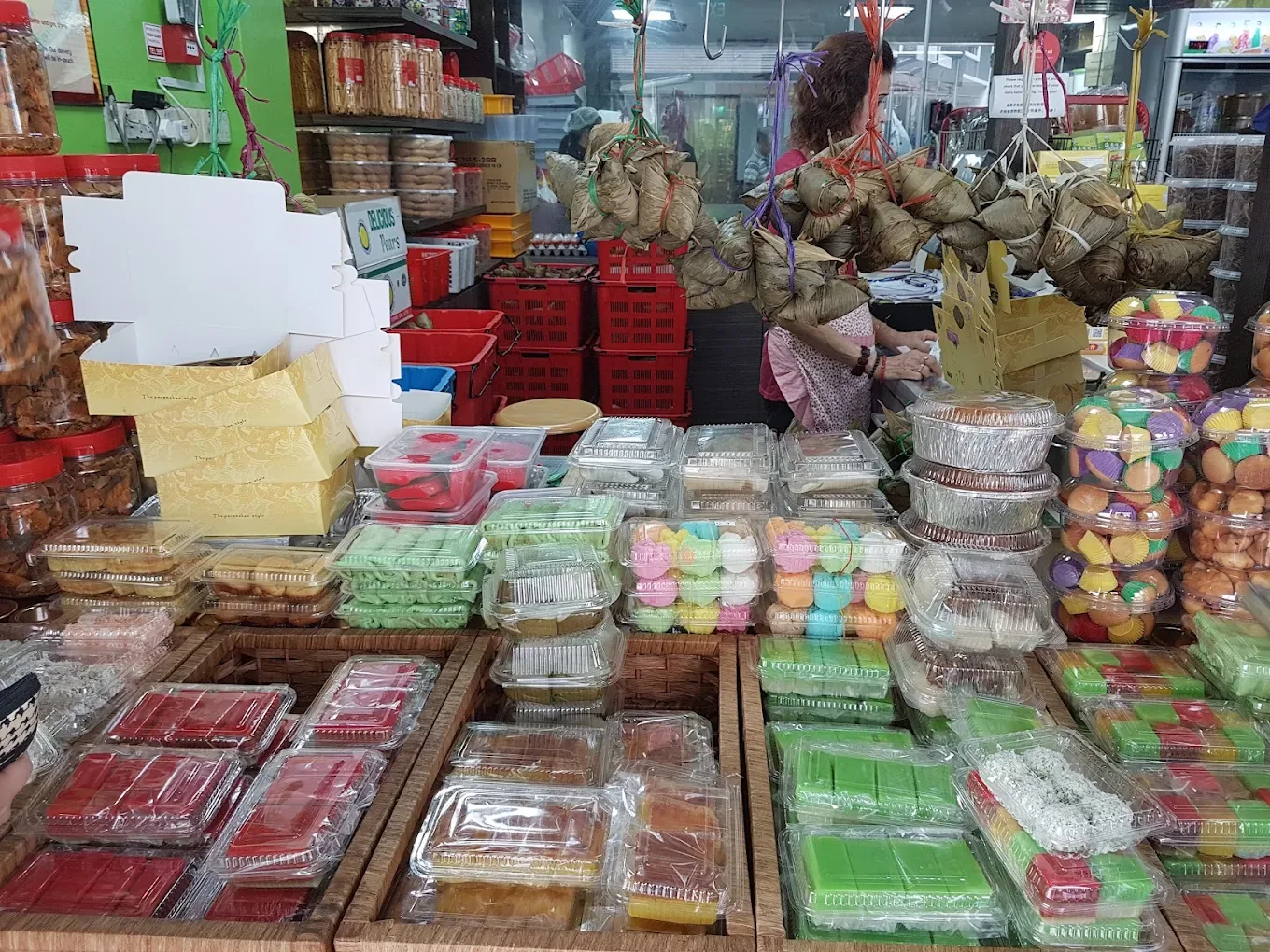
For something sweet there's nyonya kueh, the small colourful cakes you'll see in shop windows in Katong. There are too many to cover here, so they'll get their own post.
Is Peranakan culture dying?
Not yet, though it's smaller than it was. Over the years, many Peranakan families have become part of the wider Chinese community, and fewer young people speak the old languages.
But today being Peranakan is something people choose to keep up, as well as something they're born into. Making beaded slippers is picking up again among Singaporeans, says the National Heritage Board (Roots). The Peranakan Association has been around since 1900, when it began as the Straits Chinese British Association. And the Gunong Sayang Association, started in 1910, still keeps dondang sayang going: an old style of singing Malay verses that Peranakans took up.
And you can still see it in Singapore on an ordinary weekday, if you know where to go.
Where can you see Peranakan culture in Singapore?
Go to the museum for the history, and to Katong and Joo Chiat for everyday life.
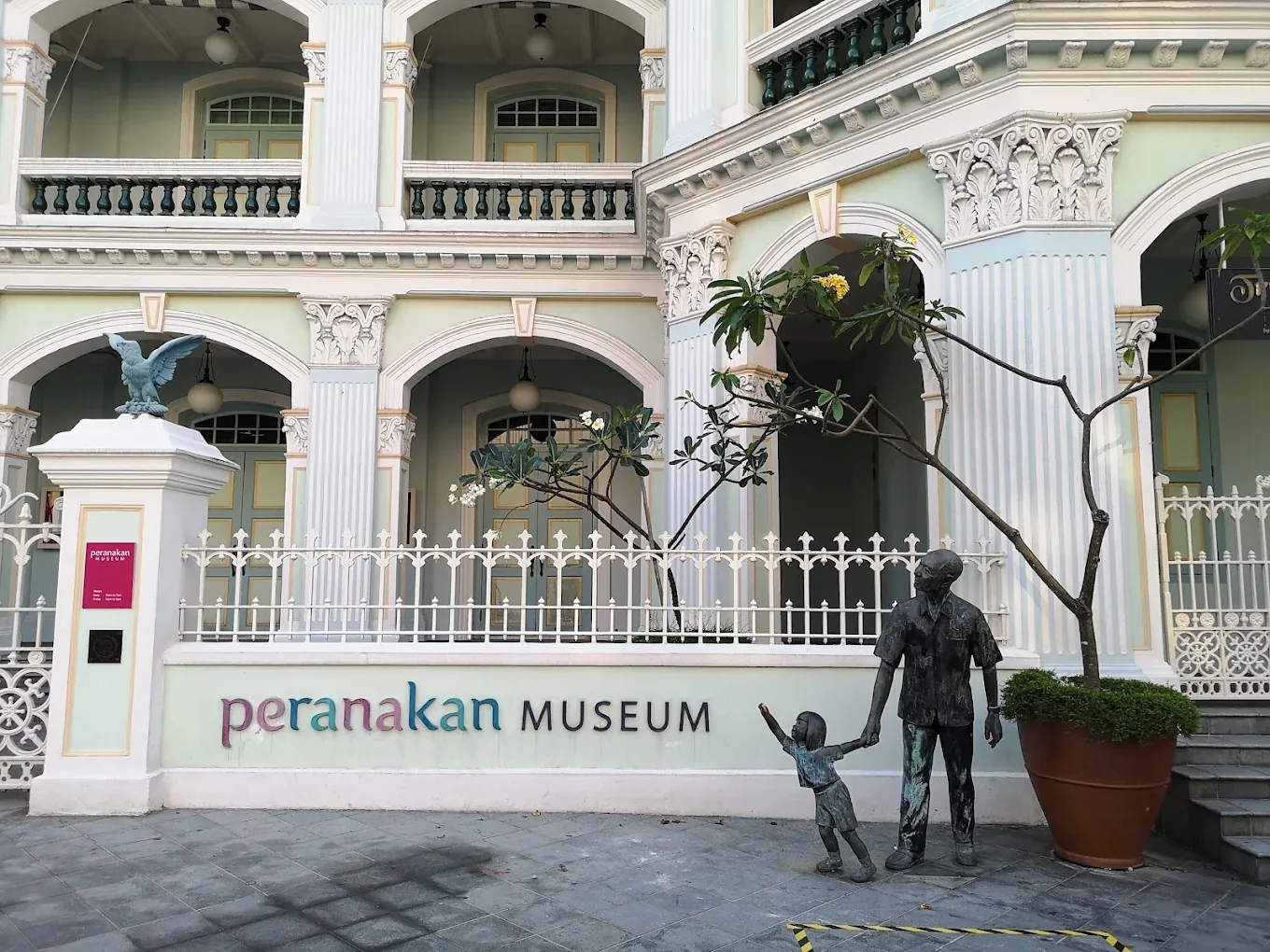
Peranakan Museum, Armenian Street. Best for the history: kebaya, beadwork and old household things up close. It's at 39 Armenian Street, about a 10-minute walk from City Hall, Bras Basah or Bencoolen MRT. It's open daily from 10am to 7pm, and until 9pm on Fridays. Ticket prices change with the current exhibition, so check the museum's visitor page before you go. It's a good plan for a rainy afternoon.
Emerald Hill, off Orchard Road. Peranakan families moved here around 1900, and the old houses are now protected. The area is known as Peranakan Place, a short walk off Orchard Road.
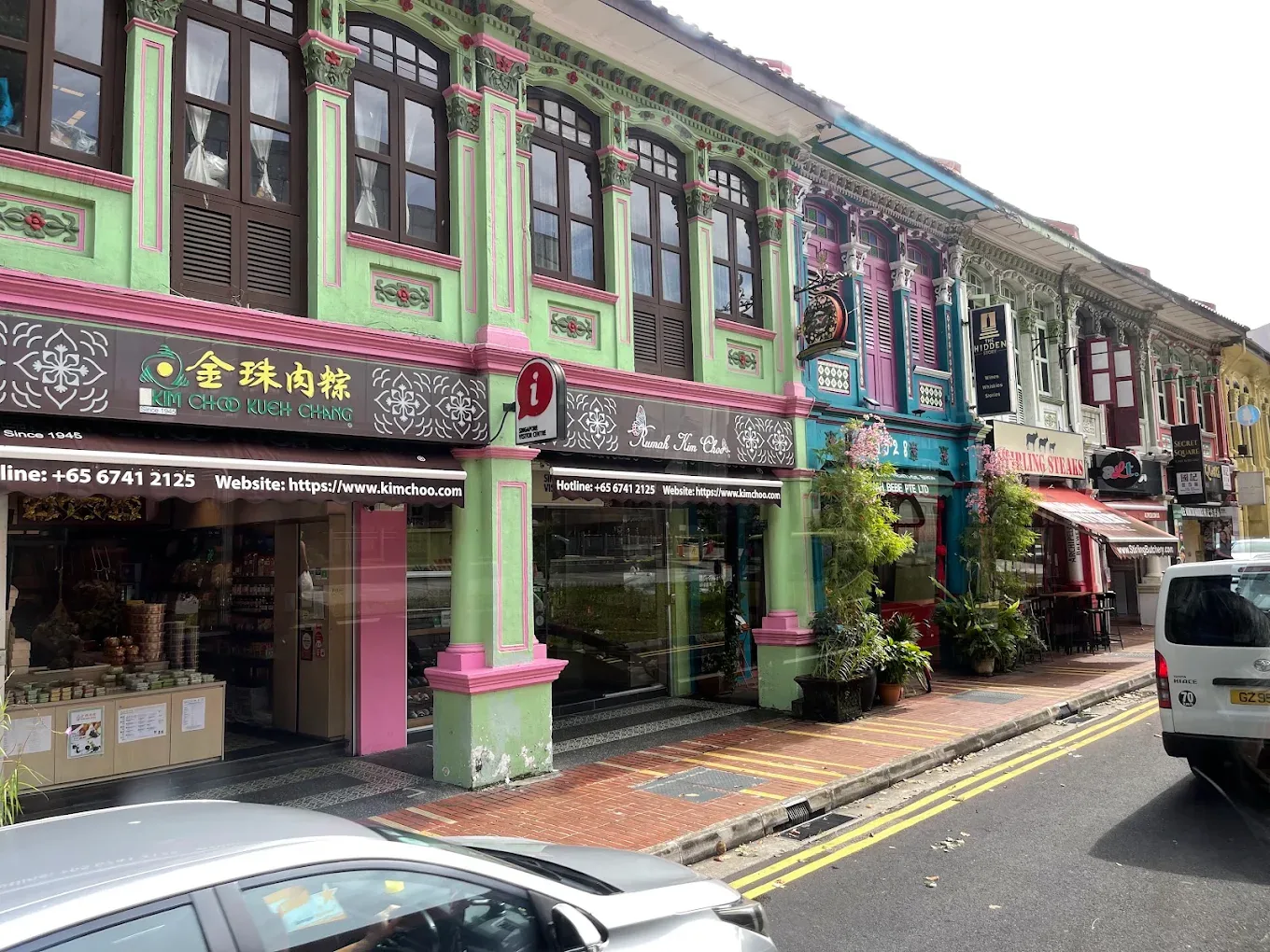
Katong and Joo Chiat. This is where you see the culture in daily life. Many Peranakan families moved here from the Tanjong Pagar area in the early 1900s. You can still see it in the house fronts on Koon Seng Road and in the area's restaurants. Kim Choo Kueh Chang on East Coast Road has been making rice dumplings since 1945. The nearest MRT is Marine Parade.
The houses on Koon Seng Road are private homes. Take photos from the pavement, and keep off the front steps.
There's something new here too. Outside i12 Katong mall, where Joo Chiat Road meets East Coast Road, all the cars now stop at once. People cross in every direction, even corner to corner. It's a scramble crossing, like Shibuya in Tokyo. It's a three-month trial that started on 16 November 2026, and Singapore's only other one is near Lau Pa Sat.
Want the stories behind the houses?
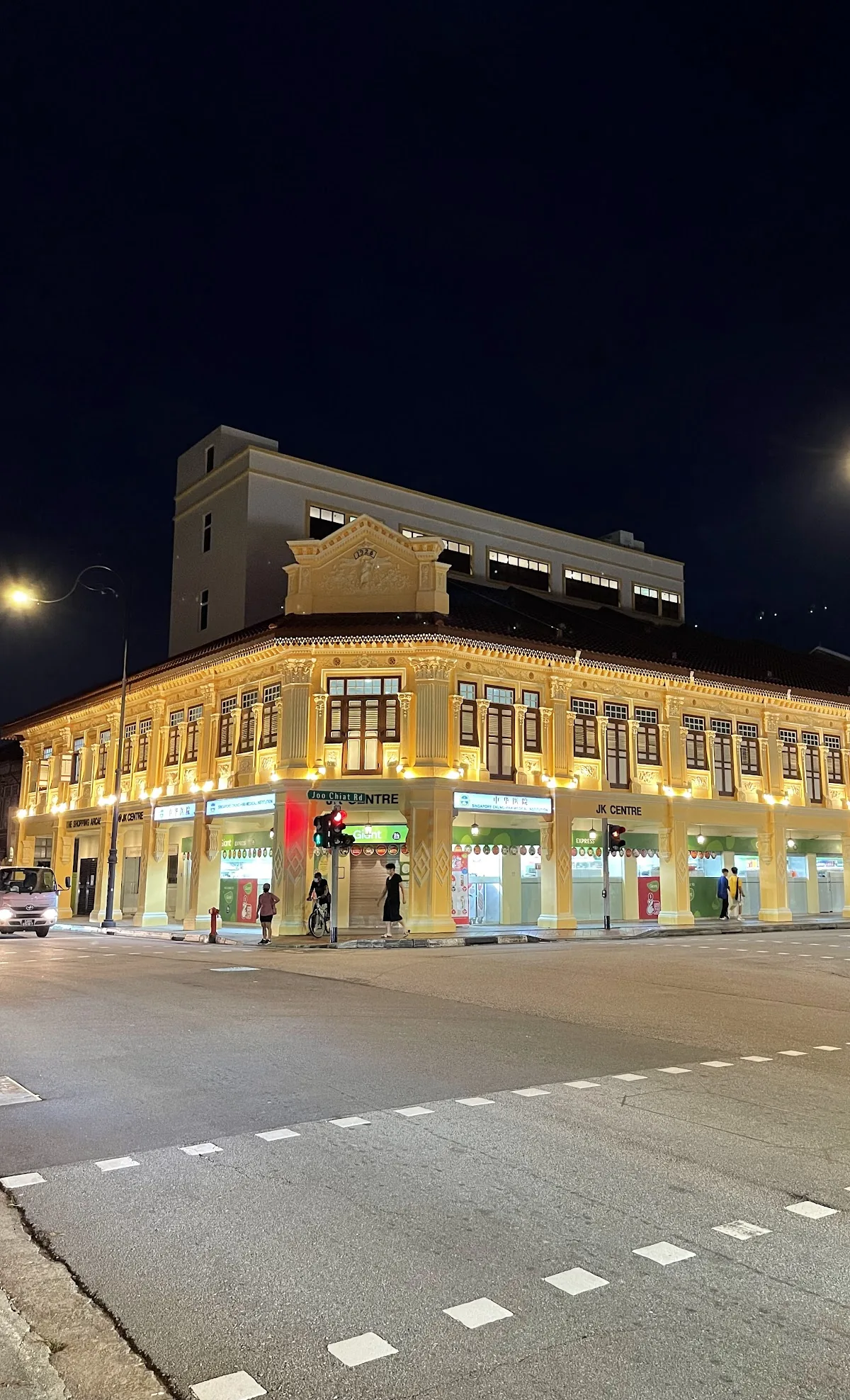
Joo Chiat is easy to photograph and hard to understand on your own. The pastel houses look like decoration until someone tells you who built them, and why so many Peranakan families ended up here.
That's what our Katong & Joo Chiat Peranakan Walking Tour is for. We meet at i12 Katong and start by crossing the scramble crossing together. Then a licensed guide tells you about Katong's past as a seaside getaway and the Peranakan families who made it home. You'll also hear about the rich landowner Joo Chiat Road is named after. A Nyonya food tasting at Kim Choo Kueh Chang is included, and we walk slowly, with time for photos and questions.
- Price: S$60 per person
- Length: 2 hours
- When: Monday, Wednesday, Friday, Saturday and Sunday, at 9am or 4pm
- Meeting point: i12 Katong, 112 East Coast Road (Marine Parade MRT)